
This page was last updated 10/14/2026 at 11:07 AM.
At the Palm Beach North Chamber of Commerce, advocating for a strong and thriving business community is one of our top priorities.
An important part of that work is ensuring our members, business leaders, and voters have access to clear, factual information about policy issues that could impact our region.
This resource page is designed to provide nonpartisan, educational information about Amendment 3 and the proposed changes to Florida’s property tax system. Here, you’ll find information about what the amendment proposes, official ballot language, helpful resources, and information about the potential implications for businesses, local governments, residents, and the broader Palm Beach North community.
Our goal is to help you understand both the proposal itself and the potential short- and long-term considerations for our region so you can stay informed and make your own decisions.
For questions and more information, please reach out to Caitlyn Mahoney.
What is Amendment 3?
Amendment 3 is a proposed amendment to the Florida Constitution that would change how homestead and non-homestead properties are treated for property tax purposes. If approved by voters, the amendment would increase the homestead exemption for certain property taxes and lower the annual assessment-growth cap for non-homestead properties.
The measure could reduce property taxes for many property owners while also reducing the property-tax revenue that counties, municipalities and certain special districts would otherwise collect. How individual taxpayers and local governments are affected will vary.
Property Tax Update: New Ballot Language Released for Florida's Amendment 3
Amendment 3 would increase Florida’s homestead exemption for non-school property taxes to $150,000 in 2027 and $250,000 in 2028, with future increases tied to inflation. It would also allow counties, municipalities, and—subject to voter approval—special districts to increase exemptions further, up to the property’s full assessed value.
The amendment would also lower the annual assessment-growth cap on non-homestead property from 10% to 5% and place limits on how counties and municipalities may use property-tax revenue, generally prioritizing public safety, education, infrastructure, natural resources, debt service, employee retirement benefits, and government operations. New Florida residents after December 31, 2026, would phase into the increased homestead exemption beginning in their fifth year of eligibility. The amendment would take effect January 1, 2027.
READ THE OFFICIAL BALLOT LANGUAGE HERE
This summary is provided for informational purposes only. Voters should review the official ballot language and full constitutional amendment before voting.
What Would Change?
| Issue | Current | Under Amendment 3 |
| Homestead exemption | $50,000 | $150,000 in 2027; $250,000 in 2028 for non-school levies, then adjusted for inflation |
| Non-homestead assessment cap | 10% annually | 5% annually |
| School taxes | Varies by municipality | Increased homestead exemption does not apply to school levies |
| Effective date | - | January 1, 2027 |
What Could This Mean for You?
Below are some potential considerations for Palm Beach North homeowners, business & commercial property owners, renters, and local governments to make when considering their vote on Amendment 3.
Homeowners
- Larger homestead exemptions could reduce non-school property taxes for qualifying homeowners.
- The amount of savings would vary based on assessed value, taxing jurisdiction and millage rates.
- School district property taxes would not receive the increased exemption.
- Future decisions by local governments could affect the ultimate impact on taxpayers, including millage rates and cutting of public services.
Businesses & Commercial Property Owners
- Non-homestead property would receive a lower annual assessment-growth cap, declining from 10% to 5%.
- This could provide greater predictability or slower growth in taxable assessments for certain commercial properties.
- At the same time, businesses should consider how local governments might respond to changes in property-tax revenue.
- Potential responses could include changes to millage rates, fees, assessments, spending or service levels, subject to applicable law and local decisions.
Renters
- Renters do not directly receive a homestead exemption on rental property, but changes in property taxation can affect the economics of rental properties.
- A lower non-homestead assessment cap could benefit owners of some rental properties, while broader changes in local government revenues or taxes/fees could also indirectly affect renters.
Local Governments & Community Services
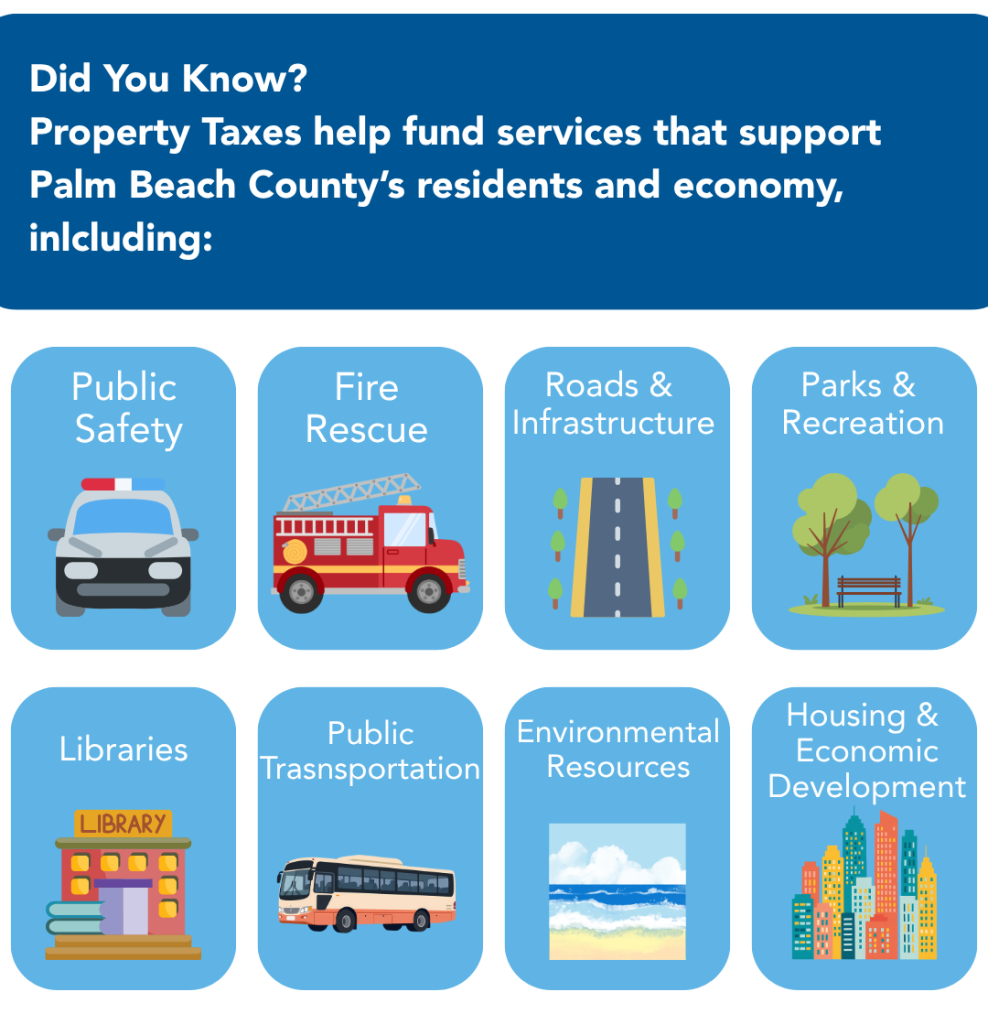
Property taxes are a major source of Palm Beach County revenue. The County's FY2026 budget includes approximately $2.167 billion in current property-tax revenue, including countywide, Fire Rescue, Library and debt millages.
Palm Beach County's budget identifies property-tax support for functions such as public safety, fire rescue, parks and recreation, roads and public works, and more.
For example, the FY2026 budget identifies approximately $110.6 million in net property-tax support for Palm Tran, $78.8 million for Parks & Recreation, $63.9 million for Engineering and Public Works, and $29.2 million for Public Safety.
Find the full County Budget here: https://discover.pbcgov.org/ofmb/budget/Pages/default.aspx
Amendment 3 Calculator
The Property Appraiser has created an Amendment 3 Homestead Calculator, which is now LIVE on the PAPA website at https://pbcpao.gov/calc-amend3-tax.htm. The calculator will let homesteaded property owners in Palm Beach County look up their property and see what their taxes may be in 2027 and 2028 should Amendment 3 pass when it is voted upon in November. It may also give them a look at the larger impact on the taxing authorities that they pay.
What Are People Saying? Arguments Being Made About Amendment 3
As voters consider Amendment 3, organizations, elected officials, local governments, business groups, and other stakeholders have raised arguments both supporting and opposing the proposal. The following summarizes some of the most common arguments being made publicly.
Inclusion does not indicate endorsement by the Palm Beach North Chamber of Commerce.
Arguments Being Made in Support
Property Tax Relief for Homeowners: Supporters argue that increasing the homestead exemption would provide meaningful tax savings for Florida homeowners. Florida Realtors, for example, says the proposal would provide property-tax relief and support attainable homeownership.
Greater Predictability for Businesses and Other Non-Homestead Properties: Supporters point to the reduction of the annual assessment-growth cap from 10% to 5%, which would limit how quickly the assessed value of commercial, rental, second-home, and other non-homestead properties can increase.
More Money Retained by Property Owners: Supporters argue that reducing property tax allows homeowners to retain more of their income and reduces the ongoing cost of homeownership. Based on Florida TaxWatch's example using the statewide average non-school millage rate, a qualifying home assessed above $250,000 could see substantial savings once the exemption is fully phased in, although actual savings would vary by jursidiction and property.
Pressure for Greater Government Efficiency: Some supporters view reduced reliance on property taxes as an opportunity for local governments to reevaluate spending, prioritize essential services, and find efficiencies rather than continuing to benefit from rapidly increasing property values.
Improved Housing Affordability: Florida Realtors argues that lowering property-tax costs could help strengthen Florida's commitment to attainable homeownership by reducing the ongoing cost associated with owning a home.
Protection Against Rapidly Rising Assessment: The 5% non-homestead assessment cap would provide commercial and other non-homestead property owners additional protection against large year-over-year increases in assessed value.
Voters Gain Greater Control Over Property Taxation: Supporters can argue that the amendment gives Floridians the opportunity to constitutionally limit the property-tax burden and establishes a process through which exemptions could potentially be expanded further.
Sources:
Arguments Being Made in Opposition / Raising Concerns
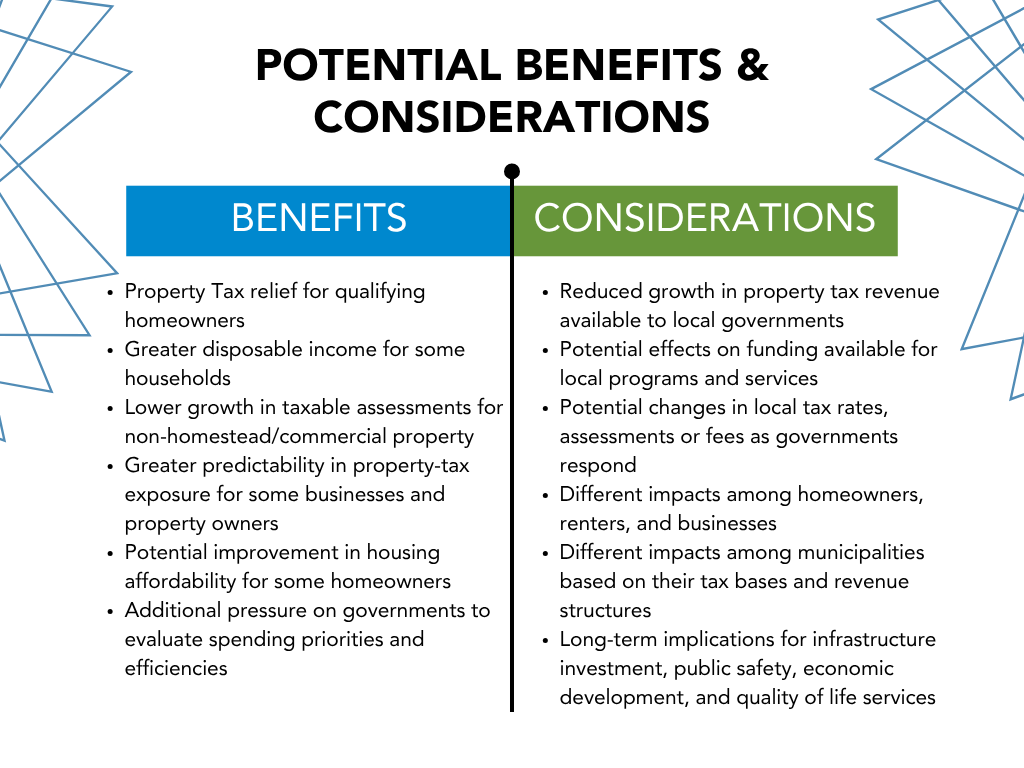
Reduced Local Government Revenue: Opponents point to projections that the amendment would significantly reduce the property-tax revenue available to counties, municipalities, and certain special districts. Florida TaxWatch notes that the amendment does not provide dedicated state funding to replace lost local revenue.
Potential Pressure on Local Services: Public-safety and local-government organizations have raised concerns that reduced revenues could affect governments' ability to fund police, fire rescue, emergency response, infrastructure, parks, libraries, and other services. The extent of any service impacts would ultimately depend on individual local governments and their budget decisions.
Possibility of Higher Millage Rates or Other Fees: Critics argue that local governments may respond to revenue losses by increasing millage rates where legally possible or relying more heavily on fees and other revenue sources. Amendment 3 itself does not prohibit governments from taking those actions.
Potential Shift Toward Business and Renters: Opponents emphasize that renters do not directly receive the expanded homestead exemption. They argue renters could still experience indirect effects if landlords or local governments pass along higher costs through rents, fees, or charges.
Different Communities Could Experience Very Different Impacts: Florida's local governments vary substantially in their reliance on property taxes, existing millage rates, tax bases, and alternative revenue sources. As a result, critics argue that communities with greater dependence on property taxes or less ability to raise other revenue could experience greater fiscal pressure.
Reduced Local Flexibility: Critics argue that the amendment could constrain local governments by reducing their tax base while also placing constitutional restrictions on the purposes for which property-tax revenue may be used.
Sources:
Where Organizations Stand
Support
Oppose/Raise Concerns






Why This Matters to Palm Beach North
Palm Beach North is home to a diverse group of municipalities, businesses, residents and public agencies, each with different tax bases, service needs and economic conditions.
Changes to Florida's property-tax system may affect each community differently.
For businesses, the issue extends beyond the amount paid on a property-tax bill. Local revenues help support infrastructure, public safety, transportation, parks, economic development and other services that contribute to the region's business climate and quality of life.
The Palm Beach North Chamber encourages voters and business leaders to consider both the direct tax implications of Amendment 3 and its potential long-term effects on the communities in which we live, work and do business.
Where Do Your Property Taxes Go?
For FY2026, Palm Beach County property-tax revenue was allocated across countywide government, Fire Rescue, the Library District and voted debt. The County also identifies property taxes as one of its major revenue sources.
The Potential Fiscal Impact to Palm Beach North Municipalities
City of Palm Beach Gardens Fiscal Analysis
- $24 Million Annual Revenue Loss: The City estimates the $250,000 homestead exemption would reduce its recurring property tax revenue by approximately $24 million annually beginning in year two.
- Public Safety Could Be Significantly Impacted: Approximately 57% of the City’s General Fund operating budget, excluding reserves, supports police and fire services. The City says revenue reductions could result in fewer police officers and firefighters, longer response times, and reductions in public safety technology, training, and specialized services.
- Potential Shift Toward Businesses & Rentals: About 40% of Palm Beach Gardens’ homesteaded residential properties have assessed values below $250,000 and could come off the City’s tax roll entirely. The City says this could shift more of the remaining property tax burden toward commercial and rental properties.
- Reduced City Services & Infrastructure Investment: Potential impacts identified by the City include reduced recreation programs and facility hours, higher user fees, less roadway paving and median maintenance, reduced stormwater maintenance, and reduced emergency preparedness.
- Impacts Could Extend to the Business Community: The City currently invests approximately $73 million in goods, services, contracts and capital projects. Officials say reduced revenue could mean fewer contracts, delayed or cancelled projects, and less public-sector spending with local vendors and contractors.
Watch the full impact report here: https://palmbeachgardensfl.new.swagit.com/videos/399397
Budget Workshop Presentation: https://www.pbgfl.gov/DocumentCenter/View/23862/Budget-Workshop-Proposed-Budget-2026-2027_Final-2
Village of North Palm Beach
- $4.7 Million Revenue Loss in 2027, Increasing to $6.87 Million in 2028: Based on the Palm Beach County Property Appraiser’s 2026 preliminary tax roll, the Village estimates Amendment 3 would reduce annual property tax revenue by approximately $4.7 million in 2027 and $6.87 million in 2028.
- Significant Dependence on Property Tax Revenue: Property taxes currently account for approximately 68% of the Village’s General Fund revenue, making them a critical funding source for municipal operations and services.
- Public Safety Services Could Be Impacted: Property tax revenue supports essential services, including police, fire, and emergency medical services. The Village identifies potential spending and service adjustments as possible responses to reduced revenue, although no specific reductions have been approved.
- Potential Reductions in Services & Infrastructure Investment: The Village identifies infrastructure, recreation, library services, and stormwater management among the programs supported by property taxes. Revenue reductions could require adjustments to municipal services, infrastructure investments, or other community programs.
- Potential Increased Costs for Businesses & Residents: To address revenue losses, the Village may consider adjusting millage rates, implementing or increasing fees and assessments, identifying alternative revenue sources, or reducing expenditures. These measures could create additional costs for local businesses and property owners.
Read more about the Village of North Palm Beach Fiscal Analysis: https://village-npb.org/1125/Understanding-Amendment-3
Local Impact Dashboard
| Community | Property Tax Revenue | % of General Fund | Key Services Supported | Local Analysis |
| Palm Beach Gardens | $105.66 M | 69.2% | Police, fire rescue/EMS, general government, planning, public works and other core municipal operations | PBG Budget |
| Jupiter | $34.6 M | ~43.8% | Public safety, general government, engineering/public works, culture, recreation, and parks | Jupiter Budget |
| Riviera Beach | $75.91 M | ~63% | Police/public safety, fire, parks and recreation, public works, planning/community development and general government | Riviera Beach Budget |
| North Palm Beach | $27.17 M | 67.9% | Public safety, public works, building & zoning, leisure services and general government | NPB Budget |
| Lake Park | $4.26 M operating ad valorem
* The General Fund also records $2.01 M in CRM-related ad valorem |
25.5% operating | General government, library, recreation/special events, community development, public works and contracted public-safety services | Lake Park Budget |
| Juno Beach | $4.60 M | 49.4% | Police/law enforcement, public works, planning, administration and general government | Juno Beach Budget |
| Tequesta | $13.63 M | 66.8% | Police and fire rescue, transportation/streets, parks and leisure services, general government and code compliance | Tequesta Budget |
| Palm Beach Shores | Pending verification | Pending verification | Pending verification | Pending |
| Mangonia Park | Pending verification | Pending verification | Pending verification | Pending |
| Palm Beach County | $1.543 B | ~74% of recurring General Fund revenue | Sheriff/public safety, constitutional officers, courts, County departments, parks, roads/infrastructure, environmental programs and capital needs | PBC Budget |
Questions Businesses Should Be Asking
- How could the lower non-homestead assessment cap affect my business property?
- How much of my municipality's budget currently comes from property taxes?
- Which local services rely most heavily on property-tax revenue?
- How might local governments respond if property-tax revenue declines?
- Could other taxes, fees or assessments change?
- What could this mean for infrastructure and transportation investment?
- How could the amendment affect housing affordability and workforce availability?
- Could the impacts differ between businesses that own and lease their property?